
Imposter Syndrome in Women: Why High-Achieving Women Feel Like a Fraud

Why You Feel Like a Fraud (Even When You’re Not)
From the outside, it probably looks like you have it together.
You’re competent, capable, and often the person others lean on. You meet expectations, get good feedback, and keep moving forward. By most measures, you’re doing really well.

And yet…there’s this quiet, nagging feeling that you don’t quite belong.
Maybe you worry that one day, someone is going to figure out you’re not as qualified as they think. You second-guess your ideas before sharing them, brush off compliments, or tell yourself your success was really just good timing or luck. Even when things go well, the relief doesn’t stick. You’re already thinking about the next thing you have to prove.
This is impostor syndrome, and it’s far more common in high-achieving women than most people realize.
For a lot of professional women, moments like performance reviews, promotions, or being asked to take on more visibility can bring that self-doubt rushing to the surface. The higher the stakes, the louder the voice that says “who do you think you are?”
But here’s what’s important to understand: imposter syndrome isn’t about a lack of skill or confidence. It’s about carrying a quiet fear of being “found out” even in spaces where you’ve already earned your place.
In this blog post, we’ll look at how imposter syndrome shows up for high-achieving women, why it’s so persistent, and what actually helps.
Keep reading to learn more and schedule a free 15-minute consultation
The Sneaky Ways Imposter Syndrome Shows Up
Unlike burnout, which can feel physically exhausting, imposter syndrome is quieter. It lives in your head, disguised as self-awareness or humility, which is exactly why it’s so hard to catch. Here’s what it often looks like in real life:
You downplay your accomplishments — even when you’ve worked hard for them.
Praise feels uncomfortable. You deflect the compliments, explain why something “wasn’t really a big deal,” or move straight to the next thing without letting yourself feel proud. Success feels conditional — like it only counts if you can keep proving it.
You tell yourself it was luck, not skill.
Even when you prepared, worked hard, and showed up, there’s a voice that says you were just in the right place at the right time. This makes future success feel fragile, like something that could be taken away at any moment.
You overprepare, over-check, and overwork — just to feel safe.
You’re not doing this because you’re unsure of your abilities. You’re doing it because making a mistake feels like it would confirm everything you’re already afraid of. The self-monitoring is exhausting, but it feels necessary.
You look around the room and feel behind.
Even when you’re just as qualified as the people around you, your brain zeroes in on what you don’t know yet, what you haven’t done, who seems more confident. Comparison becomes a way of reinforcing the story that you don’t quite measure up.
Why Imposter Syndrome Hits High-Achieving Women So Hard
Here’s the thing that often surprises people: imposter syndrome tends to get louder as you become more successful, not quieter.

Many high-achieving women grew up learning that being competent, prepared, and reliable mattered…a lot. Maybe you got praised for being “the responsible one,” or learned early that performing well led to approval and safety. Over time, that becomes an internal rule: “I have to keep proving myself, or I’ll lose what I’ve built.”
As your responsibilities grow, the internal bar rises with them. Instead of feeling more confident, you feel more exposed. More to lose. More eyes on you.
From a therapeutic standpoint, imposter syndrome is often tied to a fear of uncertainty and not truly belonging. When the stakes feel high, your mind tries to protect you by staying on high alert, constantly scanning for mistakes, gaps, or any sign that you might fall short. It’s not weakness. It’s your nervous system doing what it thinks it needs to do to keep you safe.
Feeling like a fraud doesn’t mean you are one. It means you care deeply — and the pressure you’re carrying is real.
How Therapy Helps With Imposter Syndrome
A lot of well-meaning advice around imposter syndrome sounds like: “Just own your success!” or “Fake it till you make it!” And while that’s not terrible advice, it doesn’t get to the root of why the self-doubt keeps coming back.
Therapy isn’t about convincing yourself to think more positively. It’s about understanding what’s underneath the doubt and changing your relationship with it.
In our work together, therapy can help you:
Understand where your imposter feelings actually come from — which makes them feel a lot less like the truth
Separate your worth from your performance — so you’re not only as good as your last win
Respond to self-doubt without letting it make decisions for you
Build confidence that’s rooted in self-trust — not in constantly having to prove yourself
Feel like you actually belong in the rooms you’ve already earned your way into
The goal isn’t to never feel self-doubt again. It’s to stop letting it run the show.
Ready to Stop Feeling Like a Fraud?
I’m Laura, a licensed therapist at Calm Waters Counseling in Wilmington, NC. I offer online therapy to women across North Carolina and Maryland who are tired of second-guessing themselves despite doing all the right things. I work specifically with high-achieving women who are accomplished on paper but exhausted by the internal pressure to keep proving their worth.
You don’t have to have a crisis to start therapy. Sometimes it’s just finally being ready to stop white-knuckling it alone.
If any of this felt familiar, I’d love to connect.
Taking the First Step Toward Therapy at Calm Waters Counseling
You might be wondering if therapy is really for you, especially if things look fine from the outside. It may be worth exploring if you:
Regularly doubt your abilities even when your results say otherwise
Feel like you have to work twice as hard just to feel like you belong
Carry anxiety about being “found out” or losing the respect of others

Getting started is simpler than you might think:
Book your free 15-minute consultation — it’s a relaxed conversation, not a commitment
Fill out a short intake questionnaire so I can get to know you before we meet
Show up to your first session with Laura — no agenda required
Start doing the inner work that actually sticks — grounded in self-trust, not performance
What We Can Work On Together at Calm Waters Counseling
If imposter syndrome brought you here, you’re not alone — and it rarely shows up on its own. I help women in North Carolina and Maryland work through:
Imposter syndrome and chronic self-doubt that stick around no matter how much you achieve
Anxiety and the mental spiral of overthinking that keeps you up at night
Perfectionism and burnout when the drive to succeed starts costing you too much
Telehealth Therapy in North Carolina and Maryland All On Your Schedule

If the idea of adding one more appointment to your week feels overwhelming, online therapy was made for you. Sessions happen over secure video from wherever you are, which means no commute, no waiting room, no rearranging your day. For high-achieving women who are already stretched thin, that flexibility matters.
Want to Learn More Before Reaching Out?
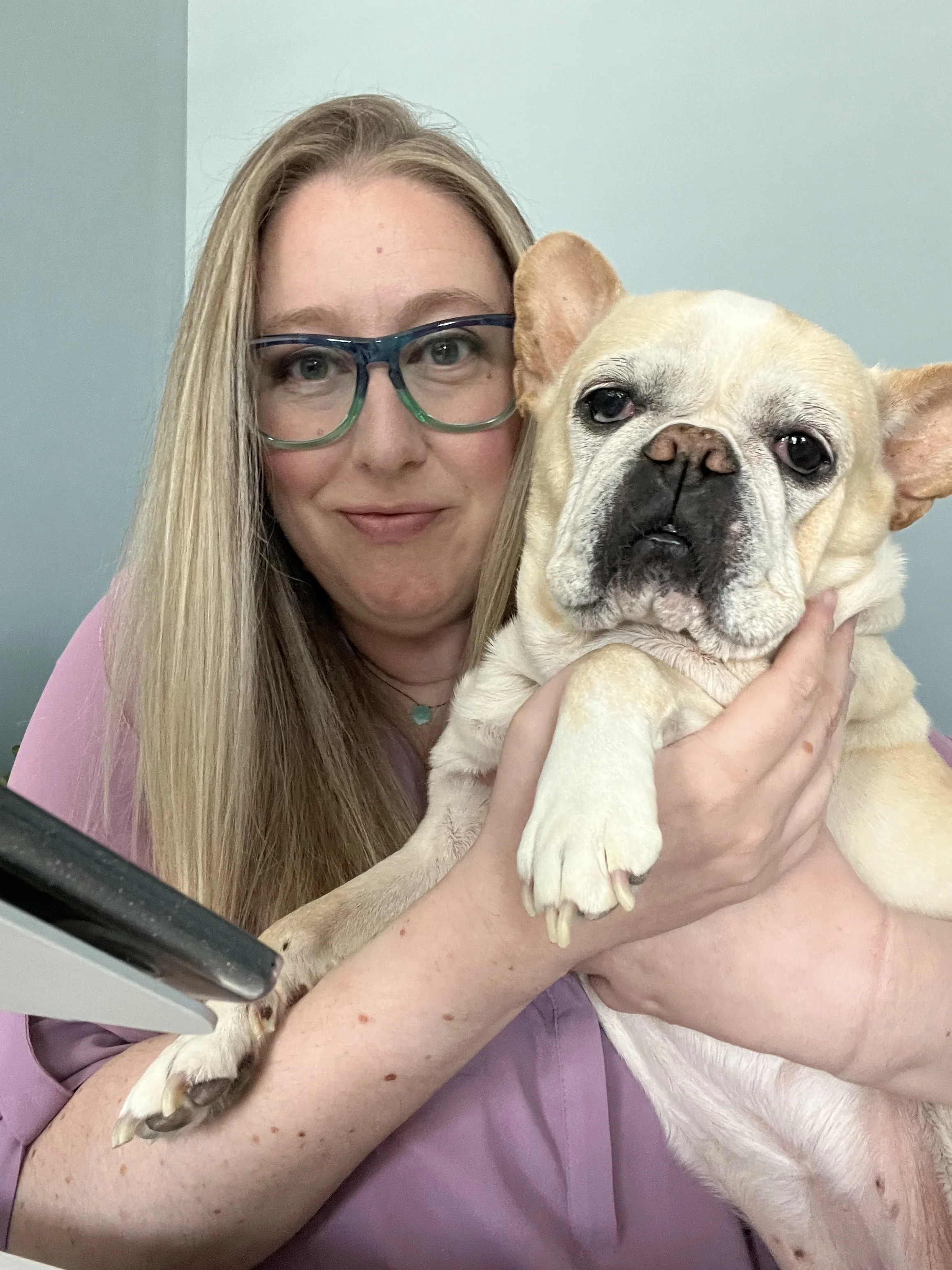
Written by Laura Rippeon, LCSW, LCSW-C, a Wilmington, NC therapist providing online therapy in North Carolina and Maryland. She specializes in anxiety, burnout, perfectionism, and imposter syndrome in high-achieving women. When Laura isn’t working with clients, you can find her spending quality time with her French Bulldogs.